
In the landscape of modern anime and manga, World’s End Harem stands out as a provocative work that intertwines dystopian themes with complex gender dynamics. Set in a near-future world drastically altered by a viral outbreak that has wiped out most of the male population, the narrative pivots around the remaining men who find themselves at the center of a highly charged societal experiment. As we delve deeper into the thematic undercurrents of World’s End Harem, we unravel how it grapples with power, autonomy, and the societal constructs surrounding gender.
The Dystopian Premise: A World Reversed
At its core, World’s End Harem is built upon the premise of a gender imbalance so extreme that it forces a reconsideration of societal roles and norms. With the majority of men dead, women assume positions of power and privilege, establishing a matriarchal society that highlights the fragility of gender hierarchies. The show challenges viewers to confront how power dynamics shift in response to catastrophic events.
This dystopian setting becomes a canvas upon which the complexities of human relationships are painted, prompting questions about autonomy, consent, and the implications of a world where one gender holds disproportionate power. The story uses sexual politics to question not just the value of gender roles but also the definition of humanity itself in the face of adversity.
Gender Dynamics and Power Play
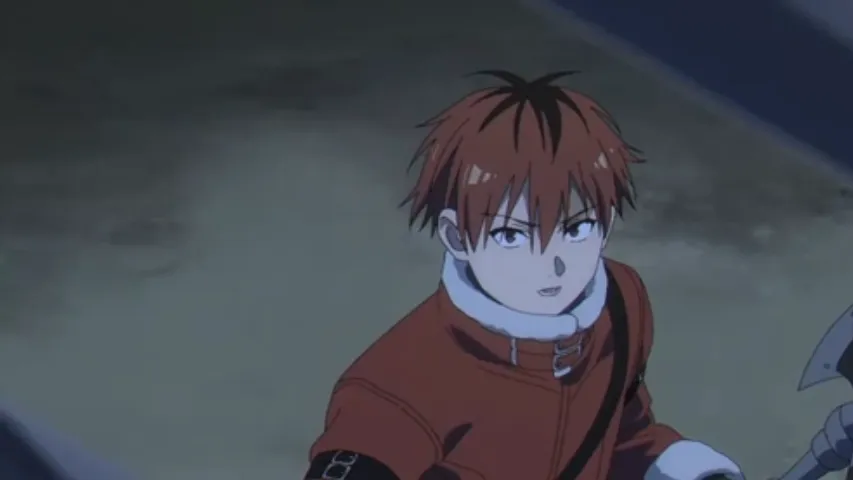
The characterization in World’s End Harem offers a layered exploration of gender dynamics, as male characters grapple with their newfound status as objects of desire rather than agents of societal change. The male protagonist, Shota, experiences a tumultuous journey of self-discovery amidst the societal upheaval. The women, rather than being portrayed solely as perpetrators of oppression, display a variety of motivations and conflicts, showcasing the complexity of human relationships in such a stark paradigm.
The portrayal of these characters highlights the often unexamined expectations placed upon each gender. The male characters must navigate their roles as both desired and objectified, leading to a nuanced exploration of consent and personal agency. Meanwhile, the women are given the mantle of governance, yet are still encumbered by the implications of their power, raising the question of whether empowerment is truly liberating or simply a new form of bondage.
Consent and Autonomy
One of the most prominent themes that World’s End Harem explores is the issue of consent in relationships marked by global disparity. As the world shifts toward a system where sexual relationships are governed by survival, the narrative forces us to examine the ethical implications surrounding consent. The interactions between the male and female characters are often fraught with underlying tension, as the pressures of the new societal structure blur the lines of voluntary participation.
While some characters thrive within the new order, others struggle with feelings of exploitation and loss of control. This dichotomy serves as a powerful commentary on the responsibility of power dynamics and the moral complexities of relationships formed under duress. The show doesn’t provide easy answers, reflecting instead the intricate moral maze that characters must navigate, which mirrors real-world discussions around consent and agency.
The Reflection of Societal Attitudes
World’s End Harem challenges viewers to reflect on contemporary societal attitudes toward gender and relationships. While the show exaggerates its premise for dramatic effect, it holds up a mirror to existing issues surrounding gender inequality and the often-unequal expectations placed upon different genders in society. By placing men and women in roles that are typically reversed, the series encourages viewers to scrutinize the arbitrary nature of gender norms.
The diverse responses of characters showcase the undeniable impact of societal conditioning. Some women embrace their new roles with zeal, while others resist, revealing the spectrum of attitudes toward power in a world redefined by cataclysm. This friction highlights ongoing conversations about gender fluidity and the struggle against binary perceptions.
Conclusion: A Cautionary Tale
Ultimately, World’s End Harem offers a cautionary tale about the volatility of societal structures and the fluidity of gender roles. By enveloping these themes within a dystopian narrative, the series compels viewers to reconsider not only the future of gender dynamics but also their current state. It ignites important discussions about power, consent, and what it means to truly be human in a landscape replete with contradictions.
As dystopian narratives continue to resonate in a world marked by uncertainty, World’s End Harem remains a noteworthy exploration of gender dynamics, urging us to question the very fabric of society and our roles within it. Through its complex characters and morally ambiguous situations, the series serves as both entertainment and a serious reflection on the nature of humanity and the transformative power of catastrophic change.